Negotiation has been a central feature of human interaction since the dawn of civilisation. From the formation of tribes and trading routes to political diplomacy and family dynamics, negotiation has operated as a core mechanism for managing relationships, resolving conflicts, and facilitating cooperation. It is no less critical in the legal profession. As lawyers, negotiation is not only central to what we do, but also to how we lead, influence, and communicate – whether in the courtroom, the boardroom, or in our offices with clients and colleagues.
While the legal profession often emphasises negotiation in the context of litigation and deal-making, it is a mistake to confine it to those domains. Negotiation is a skill that underpins every aspect of a lawyer’s professional life. It forms the bedrock of effective communication, leadership, and conflict resolution. It is also, quite simply, a human skill – deeply linked to empathy, perception, persuasion, and the ability to navigate difference.
The evolution of negotiation as a discipline
Despite its ubiquity across human societies for millennia, negotiation has only recently emerged as a formal academic discipline. It was the pioneering work of scholars such as Roger Fisher, William Ury, and later Daniel Shapiro that helped frame negotiation as a teachable, research-based practice rather than an intuitive talent. Fisher and Ury’s book, Getting to Yes, challenged the then-dominant adversarial models of bargaining and instead proposed the concept of interest-based negotiation – an approach grounded in separating people from the problem, focusing on underlying interests rather than stated positions, and inventing options for mutual gain.1
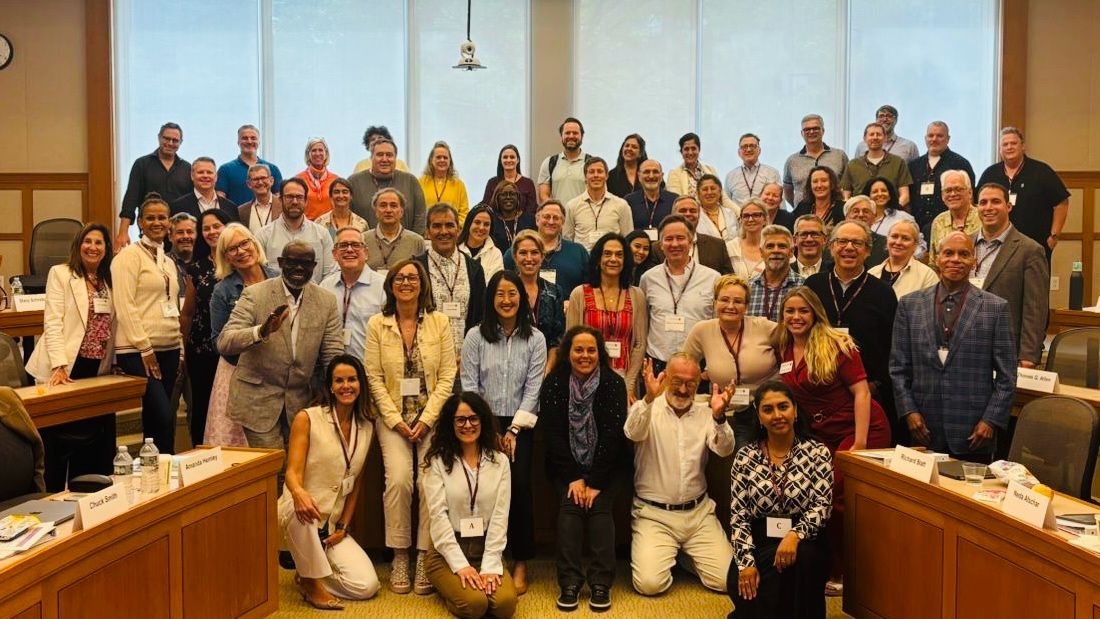
This approach gave rise to the Harvard Negotiation Project, and later the Harvard Program on Negotiation (PON), launched in 1983, which brought together scholars from law, psychology, business, and public policy.2 It was the first interdisciplinary academic program focused exclusively on negotiation and conflict resolution. The work done by PON elevated negotiation from a tactical tool to a strategic discipline – relevant not only to legal practice but to leadership, public service, and everyday interpersonal dynamics.
The two games of negotiation lawyers must play
Lawyers must master two distinct games of negotiation, each with its own mindset, mechanics, and values: trust-based negotiation and adversarial negotiation.
1. Trust-based negotiation: Where we want to mainly dwell
Trust-based negotiation is where lawyers ideally want to dwell (aside from acting in litigation which requires a more adversarial skill set). It is the terrain of collaboration, collegiality, and influence. This is the domain we engage in when working with colleagues, advising clients, managing staff, or negotiating with regulators and stakeholders. It is also where many of the most important leadership conversations occur – where we are trying to build consensus, inspire action, and resolve potential conflict before it escalates.
At the heart of trust-based negotiation lies the slow and steady accumulation of credibility and goodwill. Trust, like reputation, takes time to build and can be lost all too quickly. In this setting, the focus is less on ‘winning’ and more on understanding, persuading, and preserving relationships. The tools of the trade are empathy, listening, rapport-building, and consistent follow-through.
Some key strategies for trust-based negotiation include:
Trust-based negotiation is not naïve or soft. It is strategic, long-term, and rooted in a deep understanding of human psychology. In today’s increasingly polarised and performative professional environment, cultivating trust is one of the most powerful tools a lawyer can wield.
2. Adversarial negotiation: The tactical arena
Lawyers must also prepare for adversarial negotiation, especially in litigation, where there are typically clear winners and losers, and the stakes are high.
Negotiating in adversarial environments requires a different and unique skill set. That said, even when aiming to resolve specific litigation, lawyers still need to play the ‘long game’ appreciating that their professional reputation serves as key leverage. Maintaining honesty and consistency is crucial, as reputations have lasting influence in the legal field. That being the case, avoid exaggerating your client's case, making empty threats, or drastically changing positions during negotiations. Despite its more strategic and posturing nature (often more short-term focused when seen through the lens of a particular litigation), adversarial negotiation still relies on shared ethical standards and needs to be grounded within the parameters of professional conduct.
Essential strategies and approaches for adversarial negotiation:
When negotiating in an adversarial context, lawyers should also be aware of various cognitive biases that may influence the process. These include:
Lawyers who are aware of these biases – not only in the opposing party, but in themselves – can better manage risk and outcome. Strategic use of framing, timing, and process design can significantly influence how negotiations unfold.
Hidden drivers: Emotions and human needs
In both trust-based and adversarial negotiations, there is a layer that is too often ignored: emotion. Lawyers are trained to privilege reason over feeling, but the truth is, emotion is always in the room. It shapes our decision-making, our communication style, our perception of fairness, and our tolerance for uncertainty.
Fisher’s lesser-known work, Beyond Reason: Using Emotions as You Negotiate, co-authored with Shapiro, outlines that core human needs – such as appreciation, autonomy, affiliation, status, and role – are often the true drivers of conflict, or at the very least are present in the negotiation context.8 These needs are universal, and when they are threatened or unmet, people may become reactive, rigid, and even irrational.
For example, a client’s demand for an apology invariably stems from a need for recognition or respect. A colleague’s resistance to change may stem from a fear of losing status or identity. Even in commercial negotiations, these needs lurk beneath the surface. If you ignore them, you miss key opportunities for resolution.
As a mediator, I have noticed that professionals are increasingly attuned to emotional factors – much more than was the case previously. Lawyers now commonly acknowledge plaintiffs' experiences and apologise for any perceived insensitivity in terms of speaking about them as though they are not in the room. This use of tactical empathy can be important to keep individuals engaged and reduce reactive devaluation bias (set out above). However, for this approach to be effective, it must be genuine.
Skilled negotiators are alive to these emotional drivers – they think about in what ways various individuals need to be seen and acknowledged, even in the context of more contentious litigation. They validate the person, not just the problem. They look for non-monetary concessions (where applicable) that may meet underlying needs. They use tone, timing, and empathy not as manipulative tools, but as bridges to human connection. In more adversarial contexts, they are careful to state their appreciation for their opponent’s position and drivers, even if it is acknowledged as a case of agreeing to disagree.
Fisher and Shapiro’s insight is clear: negotiation is not just about substance – it is about people, and people are emotional beings.
Conclusion: The lawyer as negotiator, leader, and human
To be an effective lawyer is to be an effective negotiator. For a lawyer to be effective, they need to understand that we are invariably playing two games – one of strategy and outcomes (when advocating for clients in litigation) and another of trust and relationship (applicable to other spheres). Mastery lies not in choosing one over the other, but in knowing when and how to move between them.
Equally, we must learn to work with, not against, our own psychology. Cognitive biases, like confirmation bias, loss aversion, and anchoring, affect even the most rational professionals. Naming and mitigating these biases is not a weakness: it is a professional obligation.
Finally, the best negotiators never forget the emotional and human dimension. Beneath every legal dispute lies a set of unspoken needs – security, recognition, belonging, respect. When we learn to think about and acknowledge these needs, we negotiate much more persuasively and do not ‘lose the room’.
Link to AILA Article: Negotiation: The dual game of trust and strategy in the lawyer’s craft
References
1 R Fisher and W Ury, Getting to Yes: Negotiating Agreement Without Giving In (Penguin, 1981).
2 Harvard Law School, The Program on Negotiation (2025) https://www.pon.harvard.edu.
3 D Stone, B Patton and S Heen, Difficult Conversations: How to Discuss What Matters Most (Penguin, 1999).
4 Fisher and Ury, above note 1, 42–43.
5 D Kahneman and A Tversky, ‘Prospect Theory: An Analysis of Decision under Risk’ (1979) 47(2) Econometrica, 263.
6 L Thompson, The Mind and Heart of the Negotiator (Pearson, 6th ed, 2015).
7 R Nickerson, ‘Confirmation Bias: A Ubiquitous Phenomenon in Many Guises’ Review of General Psychology, 2(2), 1998, 175.
8 R Fisher and D Shapiro, Beyond Reason: Using Emotions as You Negotiate (Penguin, 2005).
This article first appeared in Precedent 190: The art and practice of the law, September/October 2025.
I regularly share short insights on mediation, negotiation and all things leadership. From how to optimise success in negotiations, to the skillset required to sustain high team performance and promote resilience. I share these video reflections, drawing from my experience both as a former leader in professional services and now as a mediator and leadership coach.
"Damien is an incredible Mediator. He is experienced, is always across the brief and has a depth of legal knowledge that can assist the parties to navigate even the most complex issues to reach a resolution. Damien is my first choice for any Mediation, especially for vulnerable plaintiff’s feeling overwhelmed by the process as they are immediately comforted by his affable and empathetic nature.”
Damien was engaged as an Executive Coach in our business to navigate a half-decade of poor habits, realign our leadership team and position us for a strategic exit.Facilitating an executive workshop was instrumental in resolving internal conflicts and realigning us to a collective focus on future opportunities.
I have especially appreciated your logical and calm approach to problem solving, and I have valued your methodical and composed demeanour in tackling complex issues. You have not only equipped me with effective strategies but also instilled a sense of confidence and clarity in my own decision making processes.